
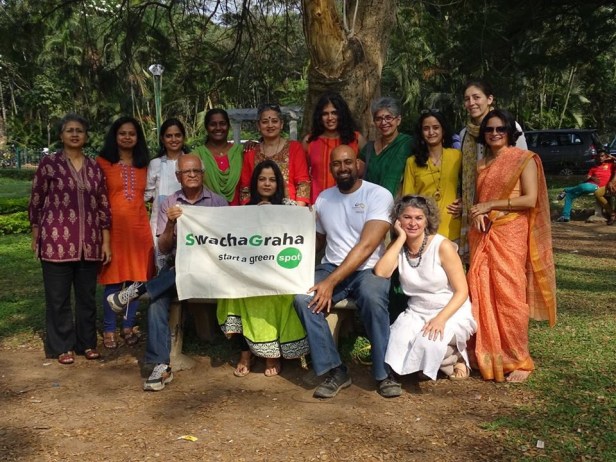
Compost| Grow|Cook: Three verbs that sparked the campaign Swachagraha.
Ten years ago, in 2016, Swachagraha began with a simple yet powerful invitation: “Start a green spot.” It started as a call to action for individuals, families, and neighbourhoods to look at waste differently, not as garbage, but as a resource: one compost bin, one garden, and one shared meal at a time, to turn everyday habits into acts of care for the planet.
- Compost: The first Green Spot begins right in your kitchen, where vegetable peels and food scraps are transformed into nutrient-rich compost.
- Grow: The second Green Spot takes root in your garden, balcony, or terrace, where that compost nourishes healthy, homegrown food.
- Cook: The third Green Spot comes alive in your kitchen again when you bring your harvest to the table, fresh, wholesome, and waste-free.
The Beginning: The Power of One Green Spot
It all began with a late-night call in 2015. Around 11 p.m., I received an excited call from Lalitha Mondreti, a resident of Bellandur, brimming with an idea, simple yet transformative. Her vision was to inspire micro actions that could spark macro change. She believed that if every home, every lane, and every institution could start one small green spot by composting using a khamba (Daily Dump’s product for composting) or even a bucket, we could begin to shift the way our city viewed and managed waste.
Following many midnight conversations and our regular Tuesday meetings at SWMRT (then housed at the Anonymous Indian Charitable Trust), that idea started to take shape. The first milestone was to plan for the SwachaGraha website, followed by the campaign’s look and feel, its logo, colour palette, developing a brand protocol for all the digital assets, and choosing a brand ambassador.
Simultaneously, work began to take shape on preparing workshop modules, content for the website, developing school engagement programs, user and stakeholder protocols, engagement with vendors, technical partner, printers, media, and more…
Many individuals stepped in from outside:
- Kabir Arora came up with a powerful concept note for the campaign
- Jeevan Claude Dsouza, who produced the amazing jingle
- Anil Annaih came on board to create a short film capturing the essence of the campaign.
- Volunteers Shyamala, Aarti, and Manoga Shastry came on board to amplify social media
- Radio Active 90.4 team for the launch of 24 radio episodes to showcase people’s personal journey led by Beula Anthony and RJ Priyanka
Growing Roots: From Homes to Communities
The campaign gradually evolved organically, with many citizens embracing composting. SWMRT and Bangalore Eco Team volunteers approached the then Commissioner of the
erstwhile BBMP, Manjunath Prasad, who decided to start composting at home himself. He soon became a strong advocate, and the BBMP stepped in to organise Compost Santhes (Fairs). Compost Santhes were designed as community events to showcase different composting methods and encourage residents to start their own green spots. Around 49 santhes were held between Feb 2017 and Dec 2018, and then COVID applied the brakes. There was an attempt to restart, but it was not the same, and gradually, BBMP started mixed waste collection. It is important to note that the Karnataka State Urban Solid Waste Management Strategy 2020 institutionalised the Compost Santhes. Clause 4.5 ii states that “Every effort must be made by the ULB to showcase sustainable options that are available at the decentralised level to keep the general public informed on best practices for waste management. For example, activities such compost-santhe have been effective in promoting best practices and community engagement at the ward level for management of wet waste. Such activities should be held at regular intervals. The ULB should seek the participation and cooperation of NGOs, SWM experts and practitioners, and RWAs, and extend support through financial and institutional resources.”
And then came Swachagraha 2.0
The Swacha Graha Version 2.0 has set out to usher in a composting revolution with many new initiatives from a first-of-its-kind Swacha Graha Kalika Kendra – composting learning center, the Swacha Graha Compost Connect- a Citizen–Farmer Connect
Swacha Graha Kalika Kendra: India’s first Compost Learning Center
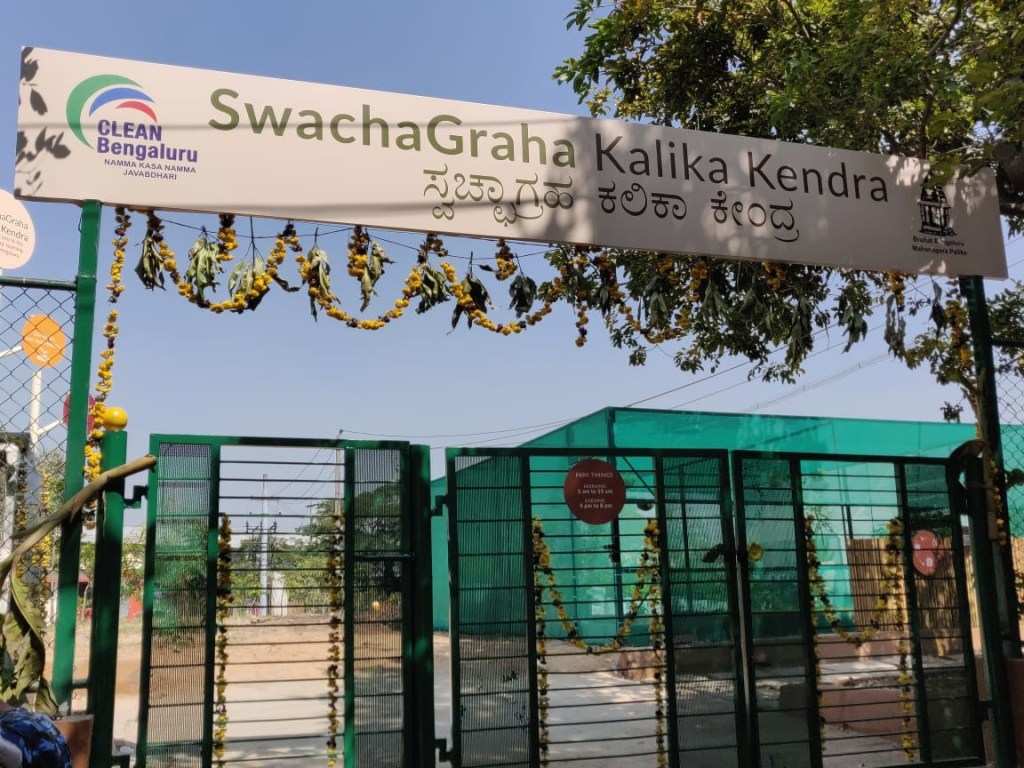
SwachaGraha Kalika Kendra, a composting learning center, is a first-of-its-kind project in India, located in Sector 4 of HSR Park in Bengaluru, and was inaugurated on 15th December 2018. The center offers exciting and educational live exhibits of more than twenty composting models, including a fully functional Biogas Unit, and a chance to explore a host of home gardening solutions for people of all age groups. While SWMRT was the knowledge partner, the BBMP (now Greater Bengaluru Authority) owns the space. This is a volunteer-driven initiative, powered by the HSR Citizens Forum. Read more: Bengaluru’s Swachagraha Kalika Kendra sets an example in community-led composting – Citizen Matters
Swachagraha Compost Connect
A natural progression of facilitating a community of urban compost producers is also to build connections with the rural farming community, to send back compost to the soil. This was Savita Hiremath’s idea of connecting urban compost producers with rural farming communities, with the sole intention of sending the precious organic waste coming out of our kitchens and gardens back to the soil in the form of compost. SWMRT’s second campaign, the SwachaGraha Compost Connect, is all about pathways and connections.
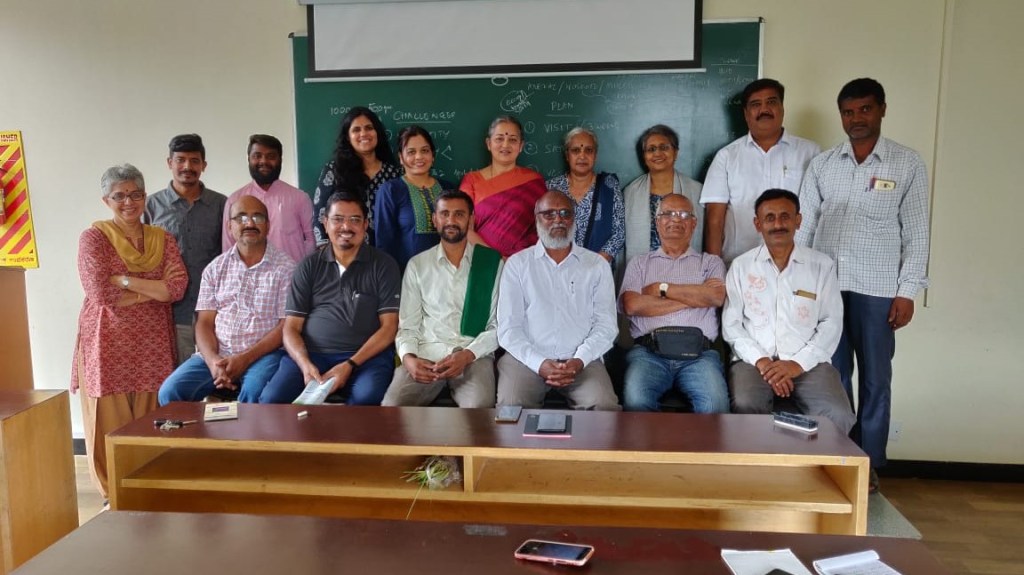
Picture Credit: Savita Hiremath
Read more here: Does your community produce excess compost? Join SwachaGraha Compost Connect campaign | ENDLESSLY GREEN
While this campaign built the necessary connections, and there is a WhatsApp group, this campaign has slowed down considerably. An important learning has been that this requires dedicated funding and necessary policy regulation to scale up. It cannot remain volunteer-run and volunteer-driven.
From Idea to Action: Building a Citizen-Led Circular Movement
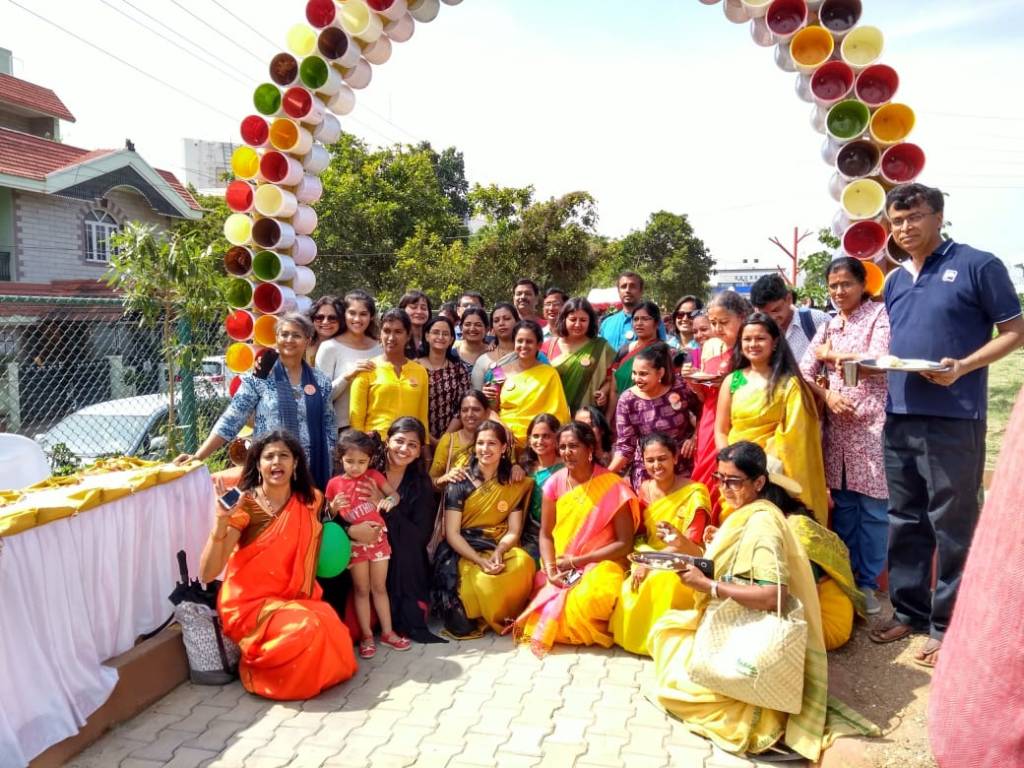
SwachaGraha rests on a simple truth: waste and food are deeply interconnected. The food we eat creates organic waste, which can become compost, which in turn nourishes the soil to grow new food. This closed loop reduces methane emissions, cuts carbon footprints, and restores our connection to the earth.
While governments at every level struggle to manage waste, SwachaGraha empowers citizens to take responsibility, transforming waste from a problem into a resource. It resonates with India’s Swachh Bharat Abhiyaan and supports the nation’s climate commitments through local action.
Bengaluru, known for its civic consciousness, embodies this spirit. If every household composts and grows even a small portion of its own food, the city could turn into one vast urban kitchen garden, preventing waste dumping, enriching the soil, and supporting farmers in nearby areas.
Looking Ahead: The Next Ten Years
What made Swachagraha different was its tone, not of blame, but of belief. It was never just about waste. It was about ownership. About citizens realising that clean cities start at home, and sustainability is not a government programme, it’s a way of life.
As we celebrate ten years, we also look forward to deeper collaborations with schools, to scaling community composting hubs, and to embedding waste literacy into every urban planning process. The next decade is about taking the Swachagraha spirit from cities to small towns and rural communities, where decentralized solutions can power local resilience.
Because the vision remains unchanged: to inspire, educate, and equip every citizen to make their own green spot and keep it growing.
A Note of Gratitude
To every Swachagrahi, the composters, civic officials, residents, and countless volunteers, thank you. You’ve shown that change doesn’t need to start big. It just needs to start.
Here’s to the next decade of soil, spirit, and sustainability. Happy 10th Anniversary, Swachagraha!
 Waste Frames