Day 3 Updates: 4th Session of the Intergovernmental Negotiating Committee to Develop an International Legally Binding Instrument on Plastic Pollution, Including in the Marine Environment (INC-4)
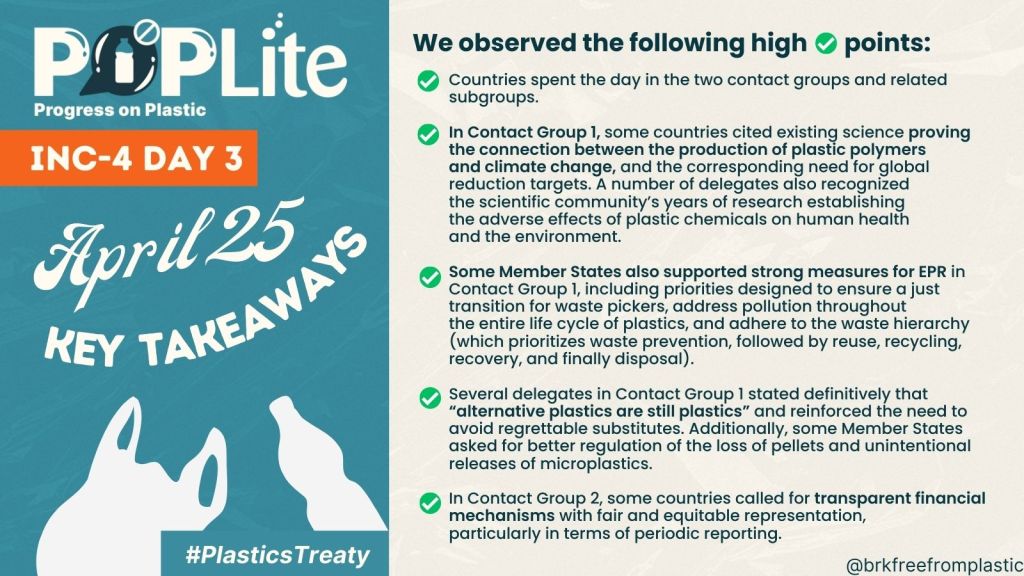
Listening to the discussions around Extended Producer Responsibility – I am forced to ask the questions: What do countries really want from EPR? While it was heartening to note that some Member States supported strong measures for EPR in Contact Group 1, including priorities designed to ensure a just transition for waste pickers, address pollution throughout the entire life cycle of plastics, and adhere to the waste hierarchy (which prioritizes waste prevention, followed by reuse, recycling, recovery, and finally disposal).
Several voices in Contact Group 1 sought to limit EPR as a way to ensure “plastic circularity” and as a hashtag#wastemanagement mechanism, while others continued to question that the UNEA 5/14 resolution mandates a treaty that encompasses the production of primary plastic polymers.
In theory, the most important aspect that underpins the policy principle of EPR, is that it will hold producers accountable to internalise the full cost of their products thereby encouraging them to reduce impacts of these products and consider redesign for lesser pollution, reuse and recyclability rather than disposal. So calling for voluntary measures, actually defeats the purpose of EPR and fixing accountability
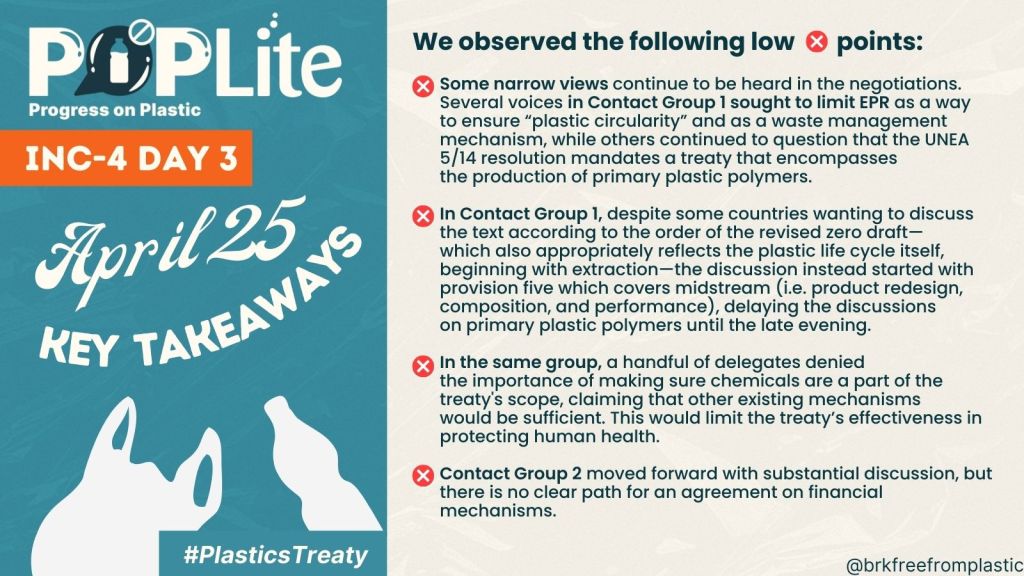
How long is too long? Until the cows come home perhaps, we discuss the scope of the treaty . And so for our Spoiler of the Day, the distinction goes to a group of low ambition delegations who—according to astute observers—appear to be similarly inclined to reopen and sow doubts over the scope of the draft treaty, even though this was already clearly articulated in UNEA Resolution 5/14. These delegations are attempting to redefine what the “full lifecycle of plastic” means in an apparent bid to reduce the coverage of the proposed treaty to waste management matters only.
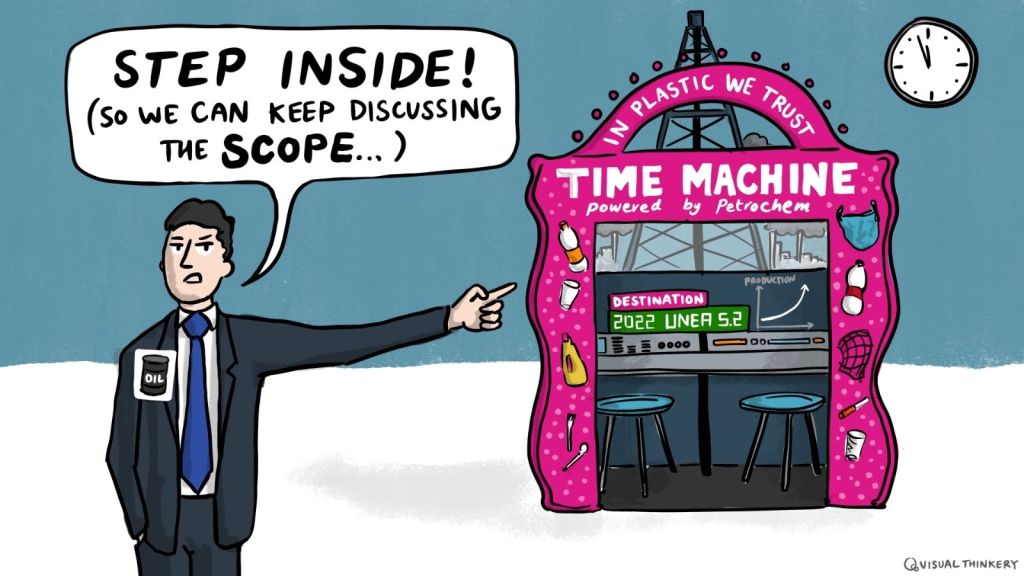
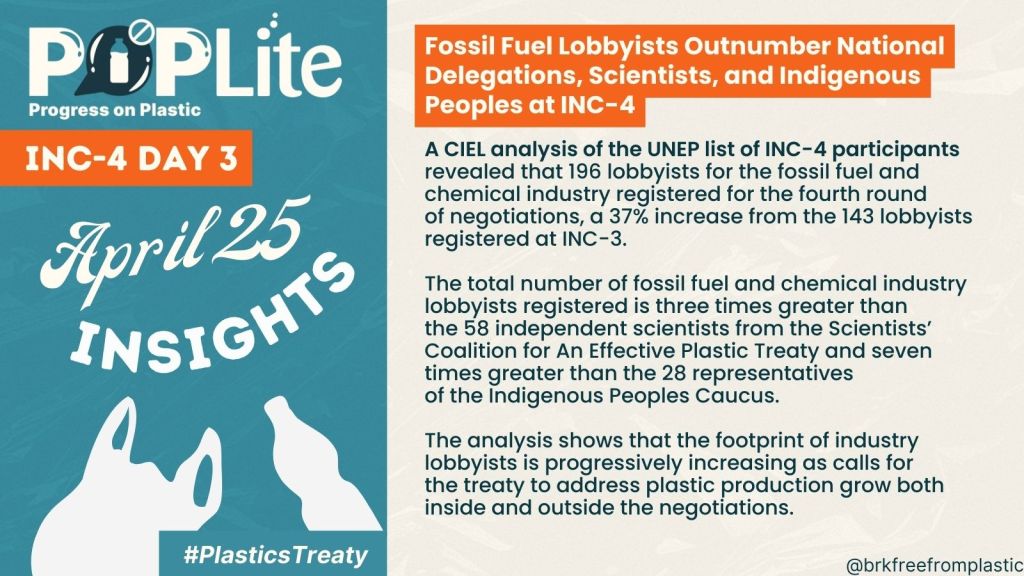
Equally concering is the progressively increasing footprint of industry lobbyists. A CIEL analysis of the UNEP list of INC-4 participants revealed that 196 lobbyists for the hashtag#fossilfuel and chemical industry registered for the fourth round of negotiations, a 37% increase from the 143 lobbyists registered at INC-3 and is three times greater than the 58 independent hashtag#scientists from the Scientists’ Coalition for An Effective Plastic Treaty and seven times greater than the 28 representatives of the Indigenous Peoples Caucus.
Read more https://lnkd.in/gzbxKvDz
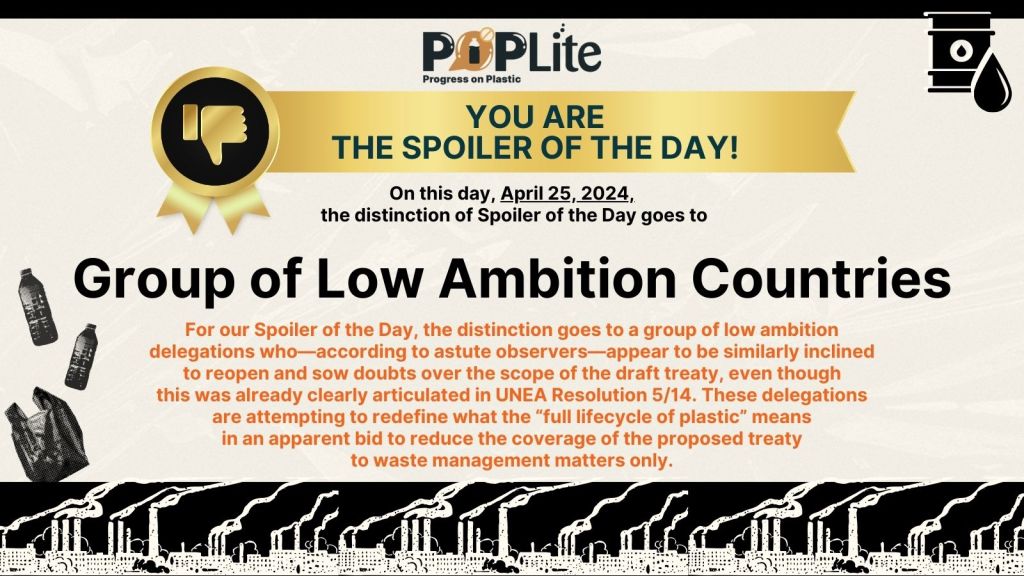
Image Credit: Break Free From Plastic
 Waste Frames