“How safe are sanitary pads in India?”. This question has been doing the rounds prompted by the recent article in the Wire, which covered the study titled ‘Wrapped in Secrecy’, by New Delhi-based NGO Toxics Link. The article talks about the research finding chemicals used in pads and the absence of mandatory limits to the use of chemicals in India. The resultant conversations based on this article have been about mainstreaming sustainable menstruation.
However, the topic on safety of sanitary pads is not new. In 2003, Ahmedabad- based Consumer Education and Research Center, had tested 10 brands of sanitary napkins on the Bureau of Indian Standards (BIS) 5405-1980 and found, dirt and ants, on some of the samples tested, even then India, did not test the toxicity of the ingredients. Malini Parmar, Cofounder Stone Soup Trust, points out to the study by Women’s Voices on Menstrual Care Products & Toxic Chemicals, says “It is extremely important that all period and intimate care products, declare all the chemicals used, as many of these products are linked to a number of health problems including cancer, hormone disruptors and allergic reactions. But to be aware we have to start reading the labels and asking questions’.
So in light of these different research, why haven’t we moved the needle? Dr. Lata Ghanshamnani, Founder Rnisarg Foundation says, “While there is a growing movement around sustainable menstruation, across India, for change to happen, you must either care for health, savings or environment, without even one of them, the switch cannot happen”.
Seeing Red: The sanitary waste problem
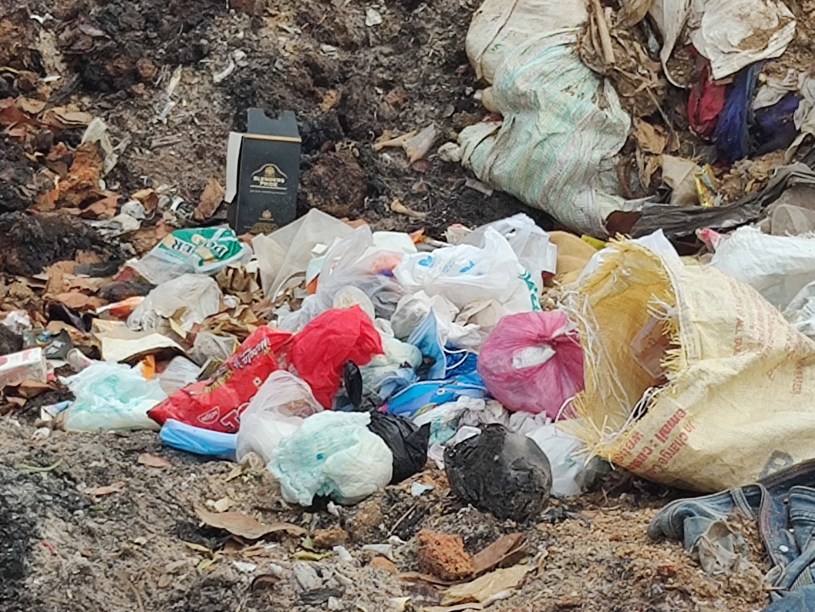
The Centre for Science and Environment estimates that India generates approximately 137,483 tonnes of used sanitary napkins annually, or 377 tonnes daily and the consolidated daily generation of sanitary napkins and baby diaper waste is approximately 925 tonnes, which accounts for 0.65 per cent of total solid waste. “The dirtiest part of waste has always been the sanitary pads and the diapers”, says Parmar. “Having worked in the space of sustainable solid waste management for over a decade, sanitary waste has not received the attention it deserves. While 0.65% percentage, may seem like a relatively smaller percentage, sanitary waste does pose a significant environmental and health risk ”, adds Parmar.
Muzzamil Khan, Additional Commissioner, Siddipet,Telangana, says “Conversations around sanitary waste are often obscured and put under translucent lens. Why are we pretending the problem doesn’t exist?”
Dr. Meenakshi Bharath, a former gynaecologist and sustainability champion who has been spearheading sustainable periods says, “A key step to sustainable menstruation is raising awareness, not just about our bodies, but also on the disposable methods. Burning, burying and flushing are the most common methods, and we take these for granted, as once it is disposed of it is someone else’s problem. We don’t even question it”. But that’s just the tip of the iceberg. Incineration is the most preferred method for disposal especially after the race to be the cleanest city in the annual Swachh Survekshan (Clean Cities) ranking. The Universities Grants Commission issued a circular asking all universities and affiliated colleges to install sanitary napkin vending machines and incinerators, with the twin aim of addressing access to sanitary products and disposal of waste. “My daughter started complaining of headache and itchy eyes, after her school installed the sanitary waste incinerator and because of that she was reluctant to use the toilet, and I knew something has to be done”, says Parmar, who then co-initiated Green the Red campaign, to raise awareness on sustainable menstruation, in 2015.
What is sustainable menstruation?
Sustainable menstruation implies practices that are healthy and leave little or no impact on the environment. ”Sustainable Menstruation for me is a process wherein I enjoy every monthly bleed as naturally as any other bodily function. Handling those days effortlessly from the product choice I make to its impact on health, finances and environment encompasses for me a truly sustainable process”, says Dr. Ghanshamnani. A single menstrual cup lasts for about 10 years and cloth pads, if properly cared for, can be used for 3-5 years.
Greening the red: Mainstreaming sustainable menstruation
In order to make the switch to environment friendly products, many menstruators are also taking to biodegradable sanitary napkins and in 2018, the Union government of India, also launched the biodegradable sanitary napkin called ‘Suvidha’, but with no system in place these pads often end up in regular waste streams further compounding the problem. There is also confusion in terms of biodegradable and compostable pads and in terms of preference, compostable is preferred over biodegradable, as many of these components only break down, and this process can take years.
“A crucial element of zero waste systems at either ward, city or country level is to advocate and push for zero sanitary waste free wards”, says Parmar. Cities such as Siddipet, Mysore are spearheading the sustainable menstruation movement, one ward at a time. “And this is possible only when we open up conversations around periods. We have to break taboos and create a positive culture, after all periods are a normal routine cyclic activity”, adds Malini, whose organisation Stone Soup Trust began working in Siddipet, Mysore and other cities.
Dr. Shanthi Tummala, former dentist and waste management practitioner says, “When Stone Soup Trust approached me with the idea, I recommended Siddipet, as there is strong political support to adopt zero waste systems. Siddipet was already making serious efforts to streamline different categories of waste with a vision towards zero landfills. But finding a destination for sanitary waste was very challenging. Incineration was not an option and the only way forward was to push for a zero sanitary waste free ward, and the Telangana Minister Harish Rao, recommended that we start work on a pilot basis in Ward 5”. The approach in Siddipet, was unique as it started with the Minister talking about sustainable menstruation at a public meeting. Following which the officers on ground engaged with the frontline workers who were sensitised and supported through a whatsapp group and regular small group meetings. From there, there was a gradual build up to engage with the police officers and then the general public. “We have managed to reach out to 16,000 menstruating people, till date”,says Dr. Tummala
What is the way forward?
“We must stop creating this cycle of selling toxic disposal products and then trying to fix the product. Post the selling and use, we then have to worry about disposal and this just goes on in a loop, with no solution. Instead, we must gradually phase out all disposables and push for recyclable products”, says Dr. Bharath.
We definitely need to normalise conversations around the menstrual cycle and knock down societal stigmas. There needs to be open spaces for dialogue as in the case of Siddipet, where there is also an auto deployed that goes around villages, talking about sustainable menstruation.
“One ward at a time, echoes,” says Anil Kumar, Manager, Mysore Operations, Hasiru Dala. In Nagawala Panchayat in Mysore, they have successfully managed to save 90% of the sanitary waste, by adopting sustainable menstruation.
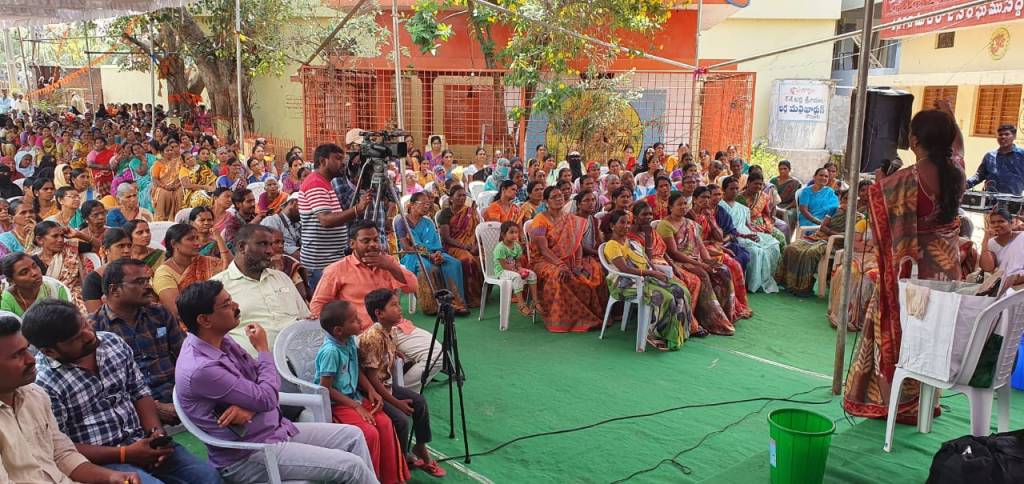
Ensure access to sustainable menstrual products: In addition, as we saw COVID disrupted supply chains for menstrual products, one needs to ensure that sustainable products are easily available. Menstrual cups, for instance, are a one time investment. The government also needs to incentivise cloth pad making units. But distributing menstrual cups to menstruators in government schools is not going to help. Each group of users needs a support system, as initially there is apprehension, and fear. “Without engaging a critical mass of people on the frontlines like the ASHA workers, the anganwadi workers, the sanitary workers, doctors, teachers, and the panchayat secretaries who can not only share experiences, amplify the importance, and serve as a support group, the movement cannot grow. And most importantly, in order to sustain, political will is most important”, says Dr. Tummala.
Watch the video here:
Note: This article was written for GAIA Asia Pacific as part of their Zero Waste Month 2023
 Waste Frames
wow!! 84#PlasticTreaty: Day 3 of INC4
LikeLike